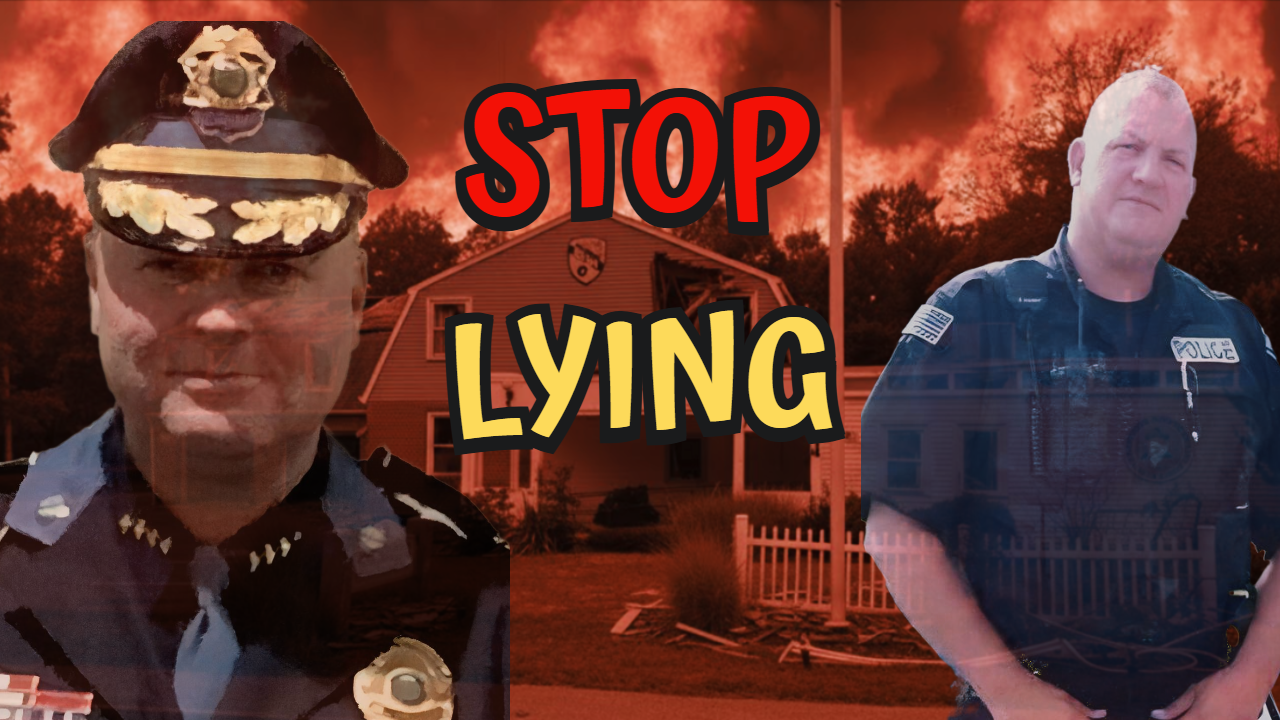
Most people like to believe problems with police are rare. A bad officer here, a bad call there. An exception, not the rule.
But when you start seeing the same types of issues over and over again in one small department, that explanation stops working. What I’ve found involving the Middleton, MA Police Department is not about one mistake or one personality. It points to a pattern that deserves public attention.
This article pulls together court records, public reporting, and documented cases I’ve already covered separately. Laid out together, they paint a picture that should concern anyone who believes police power needs real accountability.
Officers Fired, Then Reinstated
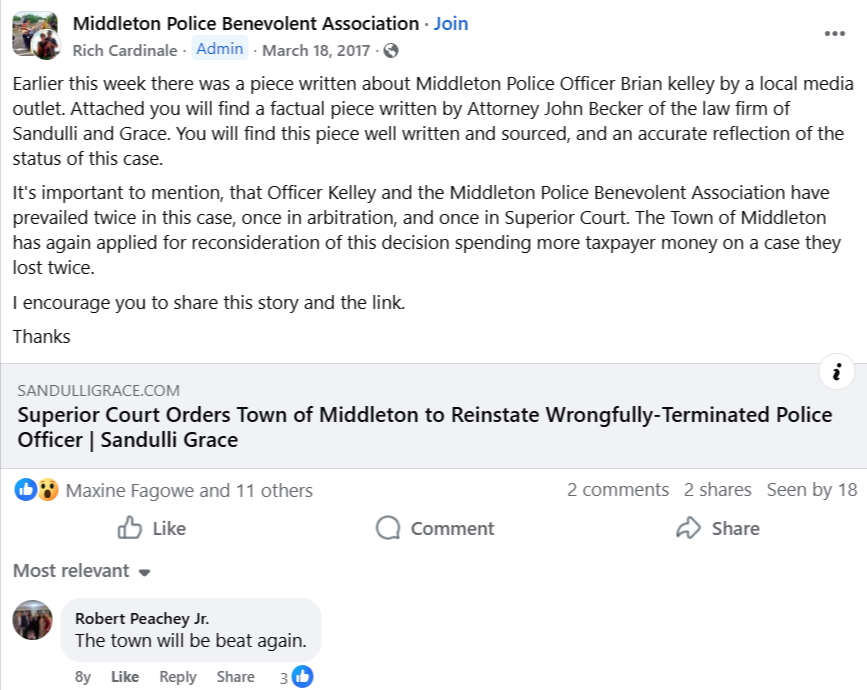
One of the first cases that stood out involved Officer Brian Kelly. His name came up in a post shared by the Middleton Police Benevolent Association, framing his reinstatement as a win over the town after arbitration and court proceedings.
What often gets glossed over is why the town tried to remove him in the first place. The underlying incident involved a domestic dispute. Charges were dropped as part of a plea deal, not because nothing happened, and not because it was proven false. Despite that, arbitration and court rulings ultimately put him back on the force.
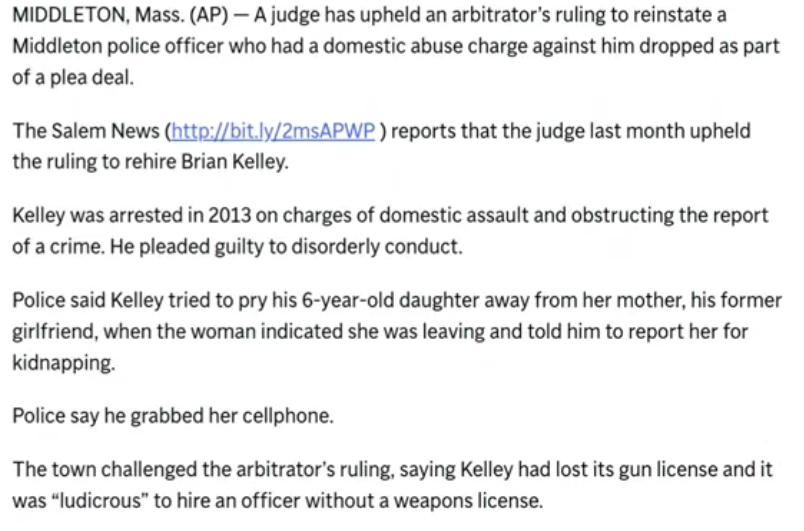
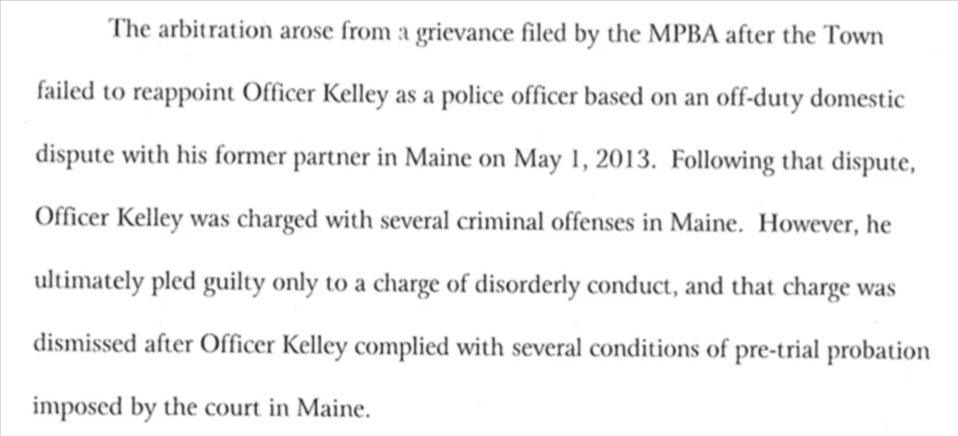
For most people, a domestic incident that costs you your gun license is a hard stop. You don’t get your job back with authority and a firearm. But when you’re law enforcement, the system frequently bends in ways it doesn’t for everyone else.
That theme comes up again.
Robert Peachy Jr. and the Double Standard
I heard rumors about Sgt. Robert T. Peachy Jr., but rumors aren’t evidence. So I did what anyone should do and tried to pull records directly from the department.
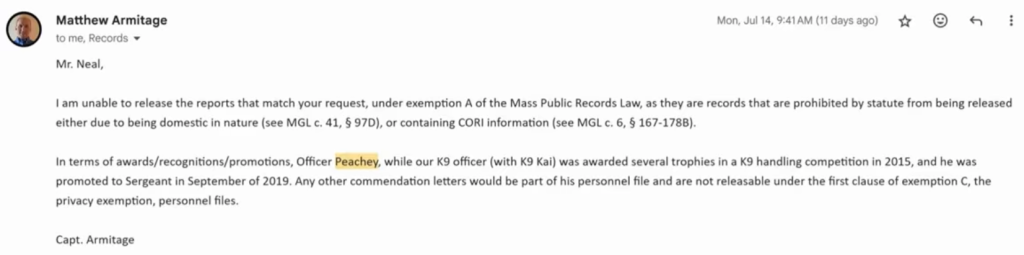
They denied the request.
The explanation cited public records exemptions related to domestic matters or protected information. The result was simple: no transparency. That forced me to go through court records instead.
What I found included a 209A abuse prevention order from 2004 that imposed serious restrictions, including firearm surrender. These are not symbolic orders. They exist because a court believes there is a real risk.

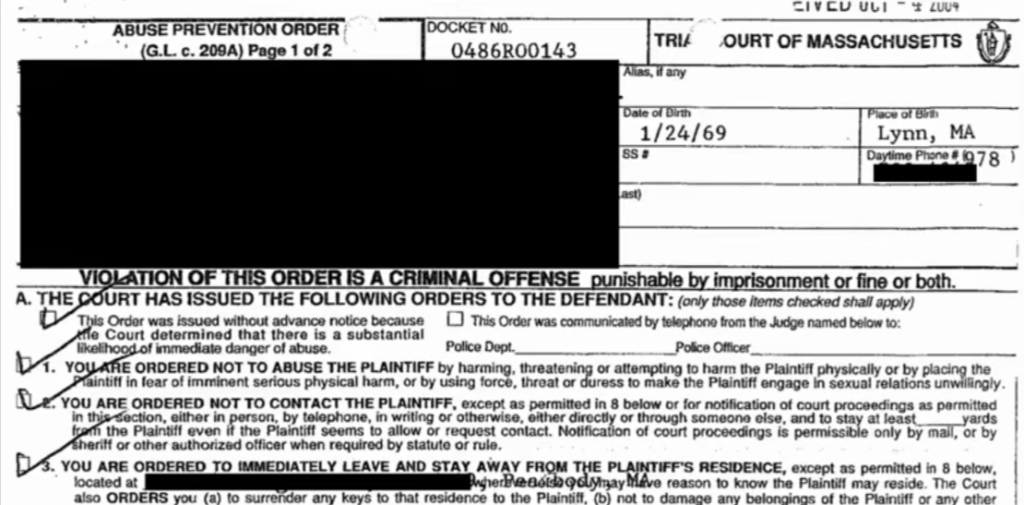

Here’s the issue. If an average person ends up in a domestic situation that results in a firearms surrender order, their ability to ever legally carry again is often over. But for police officers, there’s often a path back. Right back to the gun. Back to the badge. Then back to authority over civilians.
That isn’t about punishment. It’s about safety. Someone who loses control in a domestic conflict should not later be trusted with a weapon and arrest powers. Yet the system regularly allows exactly that.
Leadership and Judgment Questions
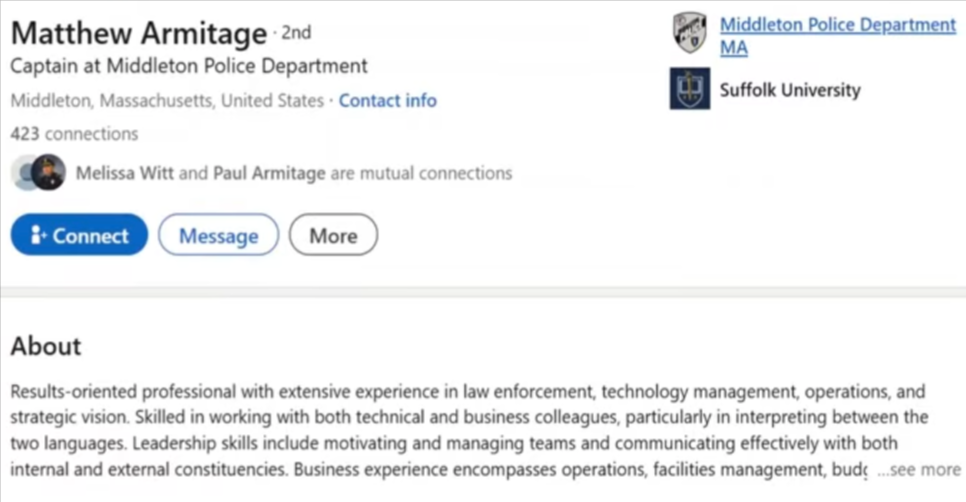
I’ve had personal interactions with Captain Matthew Armitage that left me with serious concerns about his judgment. That’s my experience, and I’m upfront about that bias.
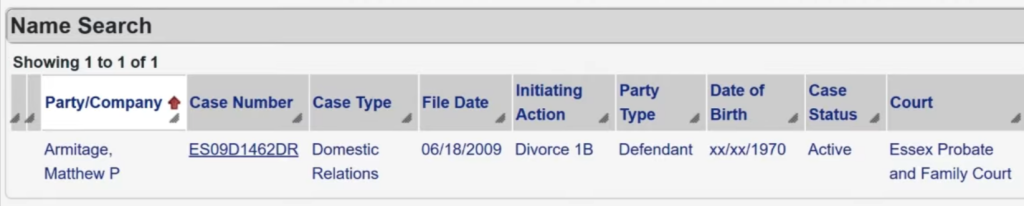
But court documents don’t care about bias. In the following pictures, keep in mind that the statements made are the ex’s claims. I do not have any proof to the validity. The court may have seen the evidence, however it was not published.
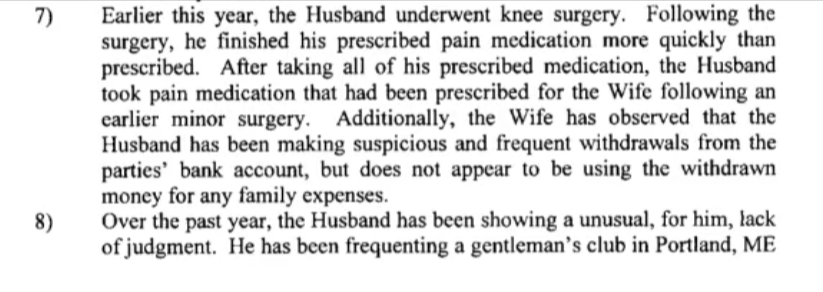
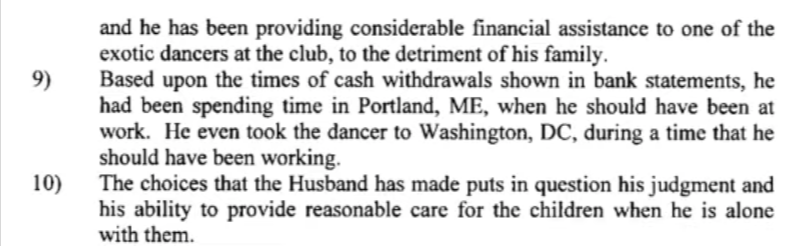
In reviewing divorce-related filings connected to Armitage, I came across court-ordered conditions that are not typical in standard family cases. I’m not publishing names or dragging private family members into this. But courts do not impose certain testing and monitoring requirements without reason.
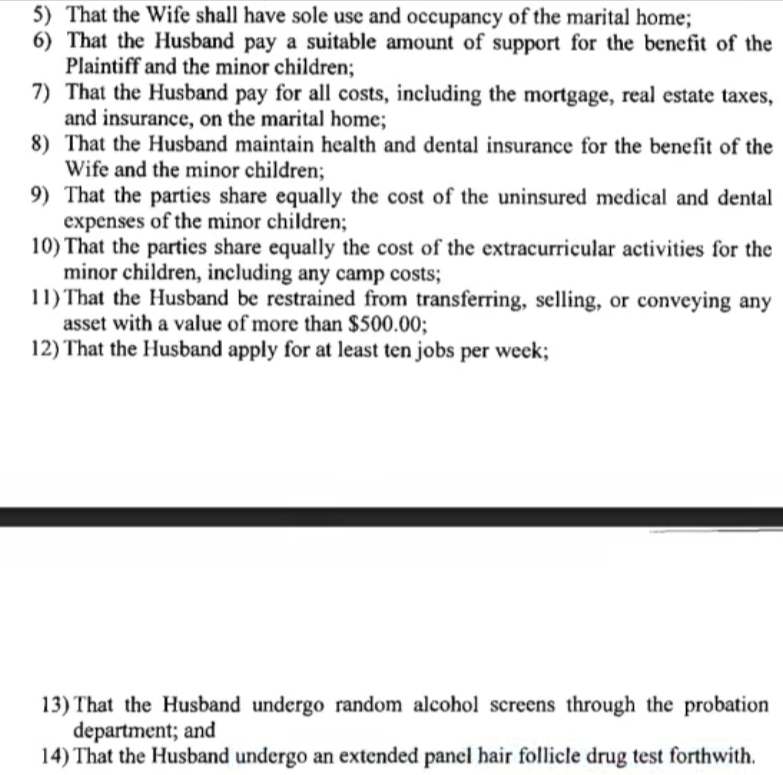
When someone in a leadership position within a police department shows up in court records with credibility or judgment concerns, that stops being personal drama. It becomes a public issue. Leadership judgment matters when reports, arrests, and charging decisions affect people’s lives.
The Chief and a History That Didn’t Stay in Vermont
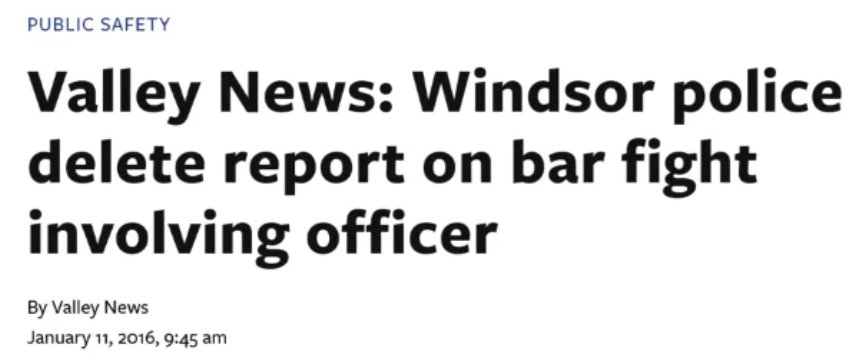
The most serious concerns involve Chief William Sampson, and they don’t start in Middleton.
Before taking over in Middleton, Sampson was the police chief in Windsor, Vermont. While there, Officer Ryan Palmer was involved in a drug sting where he shot a driver. Prosecutors later dropped a serious charge after video evidence contradicted Palmer’s account. Not long after, criminal charges were brought against Palmer by the Vermont Attorney General.
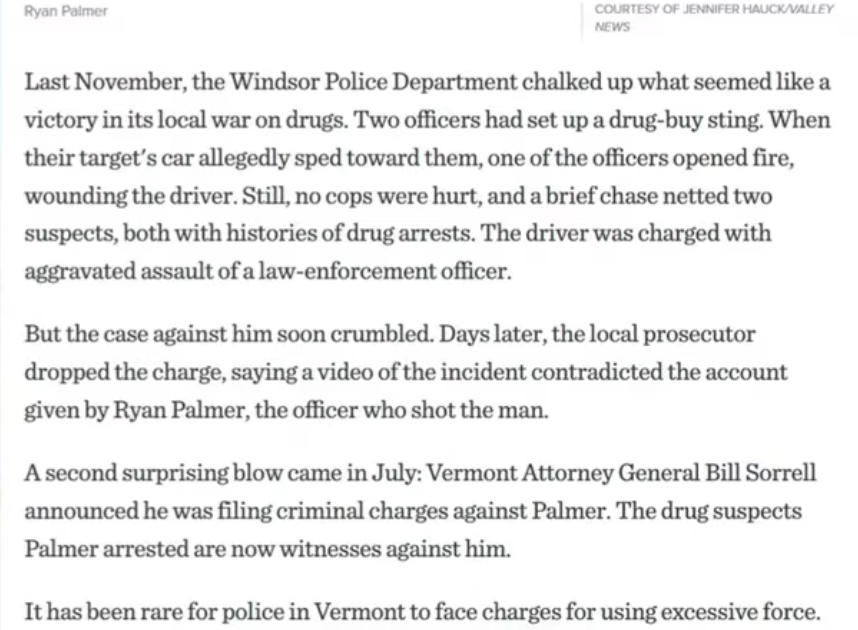
Throughout that, Sampson stood by him.
Standing by an officer is one thing. Blind loyalty is another, especially when reporting becomes an issue.
There was also a separate bar fight incident involving Palmer and Sampson that drew scrutiny. Reporting later showed that an initial police report was deleted, a replacement report left out key facts, and the version sent for prosecution did not reflect everything that should have been included.
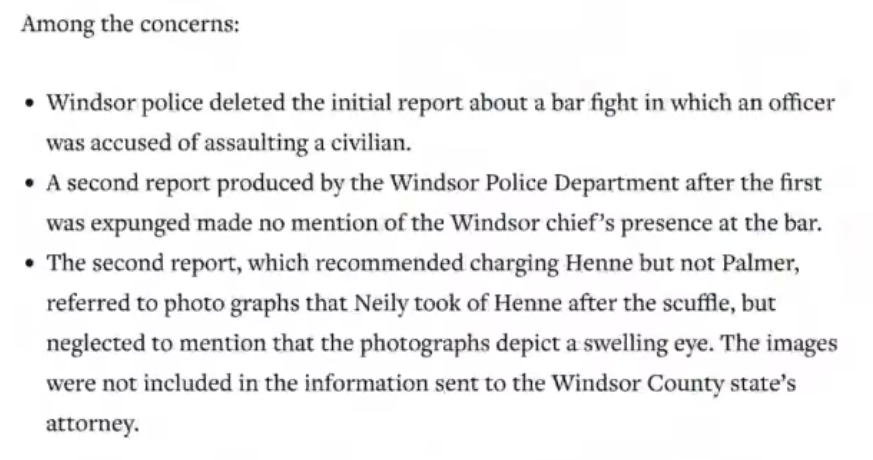
This is not a paperwork issue. Police reports are what get people charged. They are what send people to jail. They follow someone for life.
If a chief is willing to shape or rewrite a report to protect an officer, that is not a minor ethical lapse. That is how innocent people end up with criminal records they never should have had.
And if that same chief is now leading policing in Middleton, the public has every right to question what kind of culture is being protected.
The Body Camera Problem
In 2025, the body camera debate should be over. Unfortunately, the Middleton police don’t seem to have an interest in bodycams. I learned later that they don’t even have dashcams!
Body cameras protect civilians and honest officers. They prevent “trust me” situations when the stakes are someone’s freedom. Without audio and video, the public is forced to accept whatever is written in a report, even when reporting itself has already been called into question.
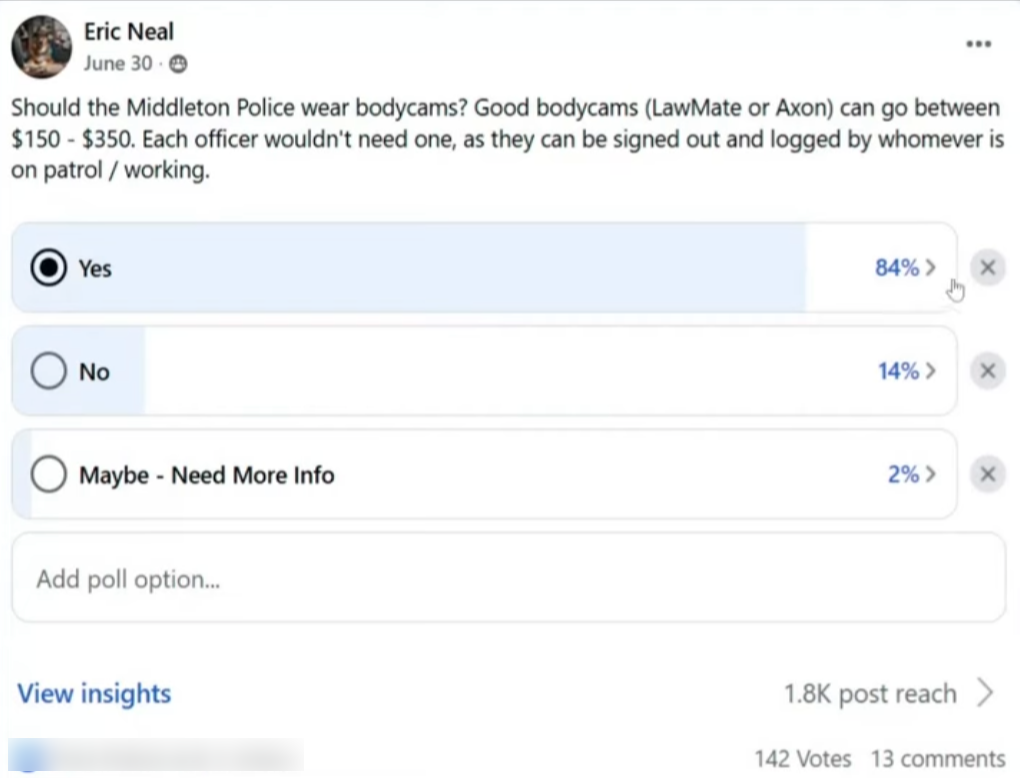
A department that resists body cameras while also limiting transparency is not building trust. It’s asking for blind faith.
What This Is, and What It Isn’t
This is not an argument that every officer in Middleton is corrupt. It is not a claim that everyone mentioned here is a bad person.
It is a documented look at repeated issues that point to systemic problems. Problems that matter when police target someone, write a report, or decide whether a charge sticks.
If there are good officers in Middleton, the real test is simple. When it’s one of their own, will they do the right thing, or will they protect the badge at any cost?
That answer matters more than anything else.
Written By: Eric Neal
To learn insider investigator secrets and gain access to custom-made tools, join skiplook.com – $25 / mo. Cancel anytime. Click Here.